
For many embarking on a solitary path, the transition from reading about magic to actually practicing it can be filled with a quiet uncertainty. Without a mentor or a coven to provide feedback, it is natural to wonder if you are truly “shifting” anything or if it’s all just imagination. Developing the ability to sense energy—often called clairsentience—is the bridge that turns theory into tangible experience. By learning to feel the subtle vibrations in your own body and the environment, you gain a vital “spiritual compass” that confirms your rituals are gaining momentum.
The “Energy Ball” Exercise to Sense Energy
The most effective way to begin is by creating a feedback loop between your own palms. When you hold your hands apart and slowly bring them together, you are essentially compressing your own auric field. As the space narrows to two to four inches, the air may seem to “thicken.” You might feel a sensation like pressing two magnets together (repulsion) or a gentle heat building in the center of your palms. This isn’t just a physical sensation; it is your nervous system translating the movement of your life force, or chi, into a language your brain can understand.
Deepening the Connection through Grounding
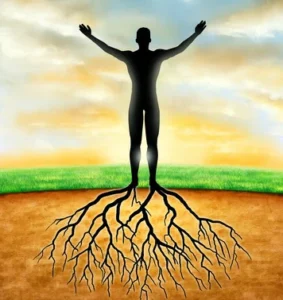
Before moving your focus to external objects, it is crucial to Center and Ground. This process ensures you are sensing energy from a place of stability rather than being overwhelmed by it. Imagine your spine as a lightning rod, pulling excess “static” energy down into the earth and drawing up a steady, neutral flow in its place. Once you feel rooted, you can direct this flow with much more precision. Visualizing a “tendril” or a golden thread of light extending from your core to your hand acts as a conduit, turning your palm into a sensitive receiver for the world around you.
Sense Energy in Objects
Every object in our physical reality carries a unique energetic signature, influenced by its material and its history. When practicing on different items, you will notice that the “flavor” of the energy changes. A piece of iron or a jagged obsidian stone might feel sharp, cold, or protective, while a living plant might feel like a soft, pulsing warmth. Crystals are particularly helpful for beginners because their crystalline lattices create a very organized, high-frequency vibration that is much easier to detect than the more diffused energy of mass-produced objects like plastic or glass.
Keeping a “Sensation Journal”
As you practice with various objects, try not to overthink the results. There is no “right” way for energy to feel—one person’s “heat” is another person’s “tingling.” The goal is to learn your own personal vocabulary of sensation. Keep a small notebook and jot down what you felt when hovering your hand over a rose quartz versus a cup of water or a piece of old jewelry. Over time, you will find that your sensitivity increases, allowing you to walk into a room and immediately sense the “vibe” or know exactly which tool is right for your next ritual without having to look it up in a book.